 EN
 FR
 AR


Auditorium Seating Solutions: How to Design a Comfortable, Functional and Professional Auditorium
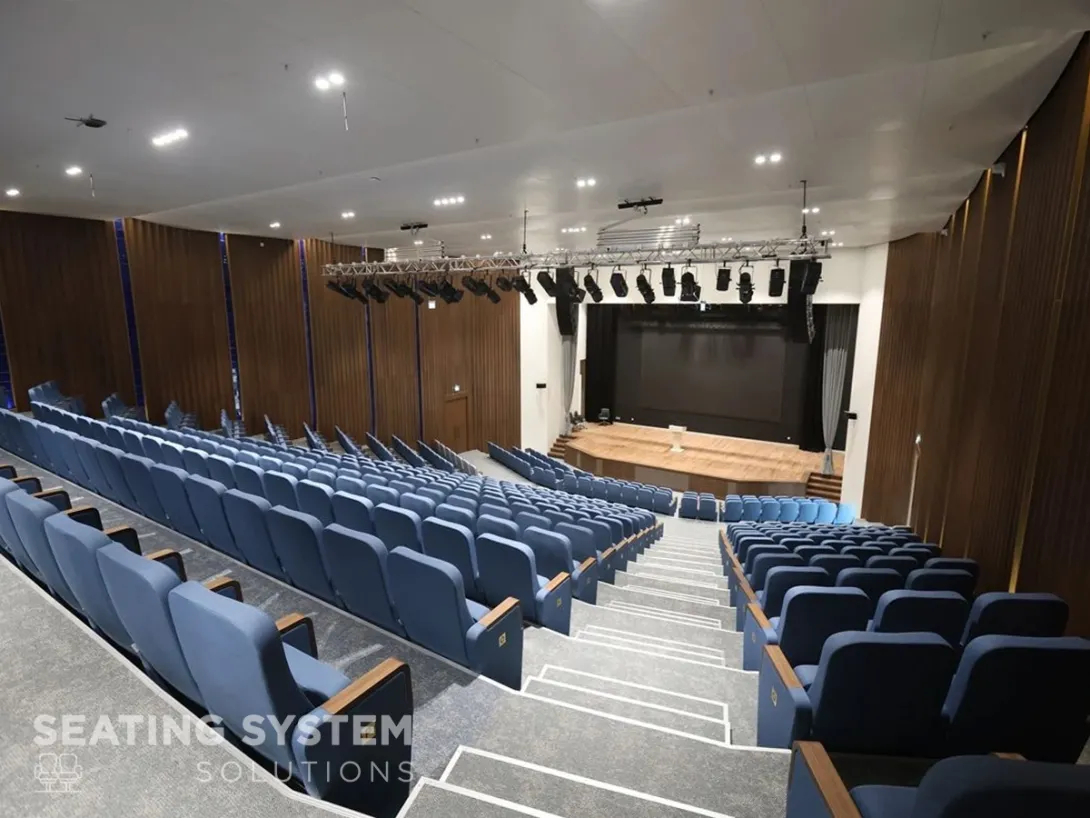
An auditorium is much more than a large room filled with chairs. It is a carefully designed environment where people gather to learn, communicate, experience performances, attend conferences, and participate in important events. Whether it is a university lecture hall, a cultural centre, a corporate conference facility, or a professional theatre, the quality of its seating plays a major role in determining the overall experience.
Choosing the right auditorium seating is therefore one of the most important decisions in any venue construction or renovation project.
Modern auditorium seating solutions must combine comfort, durability, functionality, attractive design, and efficient space utilisation. They should also meet the practical requirements of architects, project developers, educational institutions, government organisations, and venue operators.
From ergonomic upholstered auditorium chairs to wooden theatre seating, VIP conference chairs, and auditorium seats with integrated writing tables, the right seating configuration can transform an ordinary hall into a professional and welcoming environment.
At Seating System Solutions, we specialise in manufacturing commercial seating solutions for auditoriums, theatres, cinemas, universities, conference halls, stadiums, and public spaces. Based in Bursa, Türkiye, we provide a diverse product portfolio designed to support different architectural concepts, functional requirements, and project budgets.
In this guide, we explore everything you need to consider when selecting auditorium seating, from ergonomic design and materials to layout planning, durability, customisation, and choosing the right seating manufacturer.
1. Why Is Auditorium Seating So Important?
The seating arrangement directly influences how people experience an auditorium.
An uncomfortable chair can distract visitors during a presentation, make students uncomfortable during long lectures, and negatively affect the experience of guests attending conferences or performances.
On the other hand, professionally designed auditorium seating creates a comfortable environment where visitors can concentrate, enjoy events, and remain seated for extended periods.
There are several reasons why investing in quality auditorium chairs matters.
Audience Comfort
Comfort is essential in venues where people may remain seated for several hours. Proper seat dimensions, supportive backrests, appropriate cushioning, and carefully designed armrests contribute to a more enjoyable experience.
Professional Appearance
The design of auditorium chairs influences the overall atmosphere of a venue. Coordinated colours, upholstery, wooden finishes, and contemporary designs help create a consistent and professional interior.
Efficient Space Utilisation
A well-designed seating system helps maximise the available floor area while maintaining appropriate circulation, accessibility, and viewing conditions.
Long-Term Durability
Commercial auditoriums experience frequent use. Seating must be selected according to the expected usage, materials, construction, and maintenance requirements.
Better Venue Functionality
Features such as folding seats, integrated writing tables, silent seat-return mechanisms, and fixed seating configurations can improve the practical operation of a venue.
Ultimately, auditorium seating is an investment in the people who use the space and the long-term performance of the facility.
2. Different Types of Auditorium Seating for Modern Venues
Not every auditorium has the same requirements. A university lecture hall, a cultural centre, and a corporate conference room may require completely different seating configurations.
Understanding the available options is the first step towards selecting the right solution.
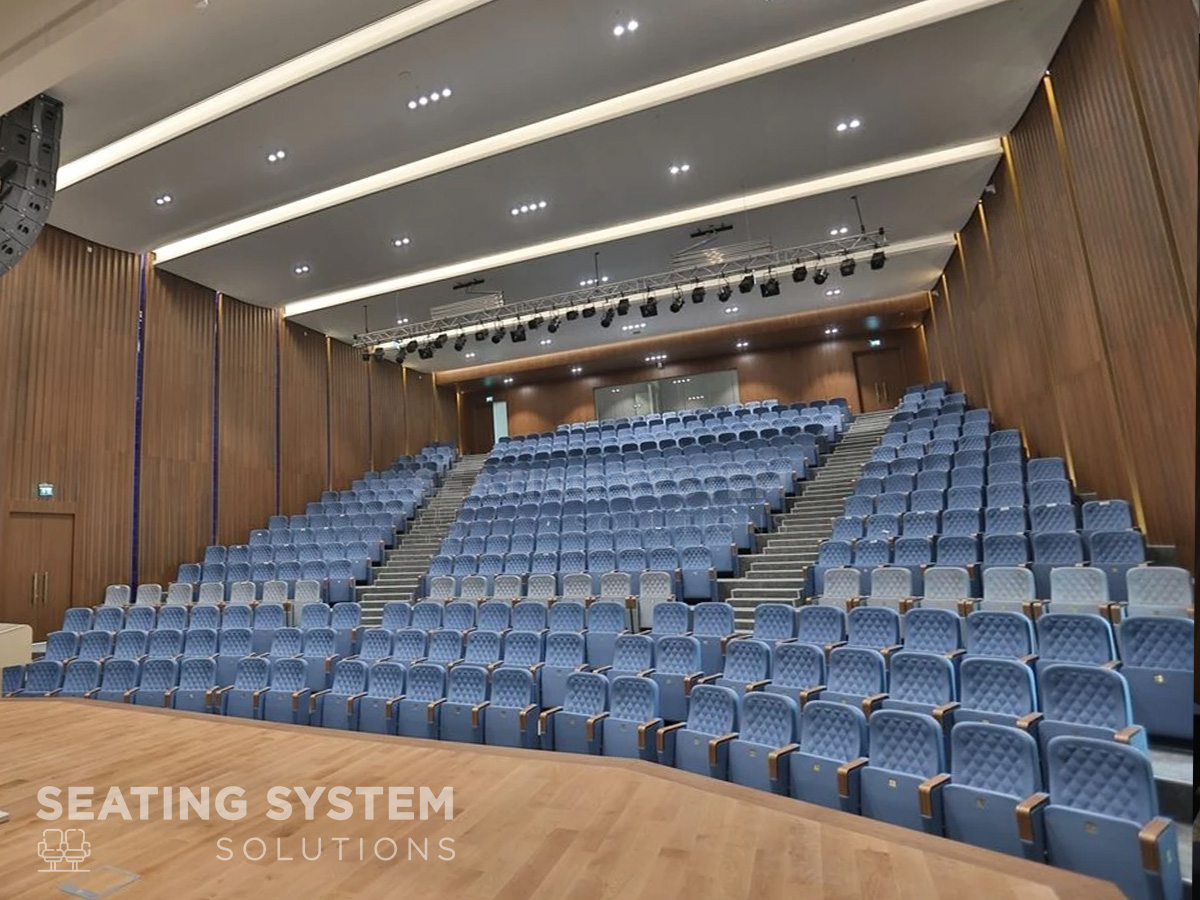
Upholstered Auditorium Seating
Upholstered auditorium chairs are among the most popular options for conference halls, theatres, universities, and cultural centres.
They combine comfortable cushioning with a professional appearance and can be available in different fabric colours, finishes, and configurations.
Key considerations include:
Comfortable seat and backrest construction.
Upholstery materials suitable for the venue.
Ergonomic design for extended sitting.
Attractive colours and finishes.
Practical cleaning and maintenance requirements.
For venues hosting conferences, presentations, ceremonies, and performances, upholstered seating can offer an excellent balance between comfort and appearance.
Explore our Upholstery Auditorium Seating collection.
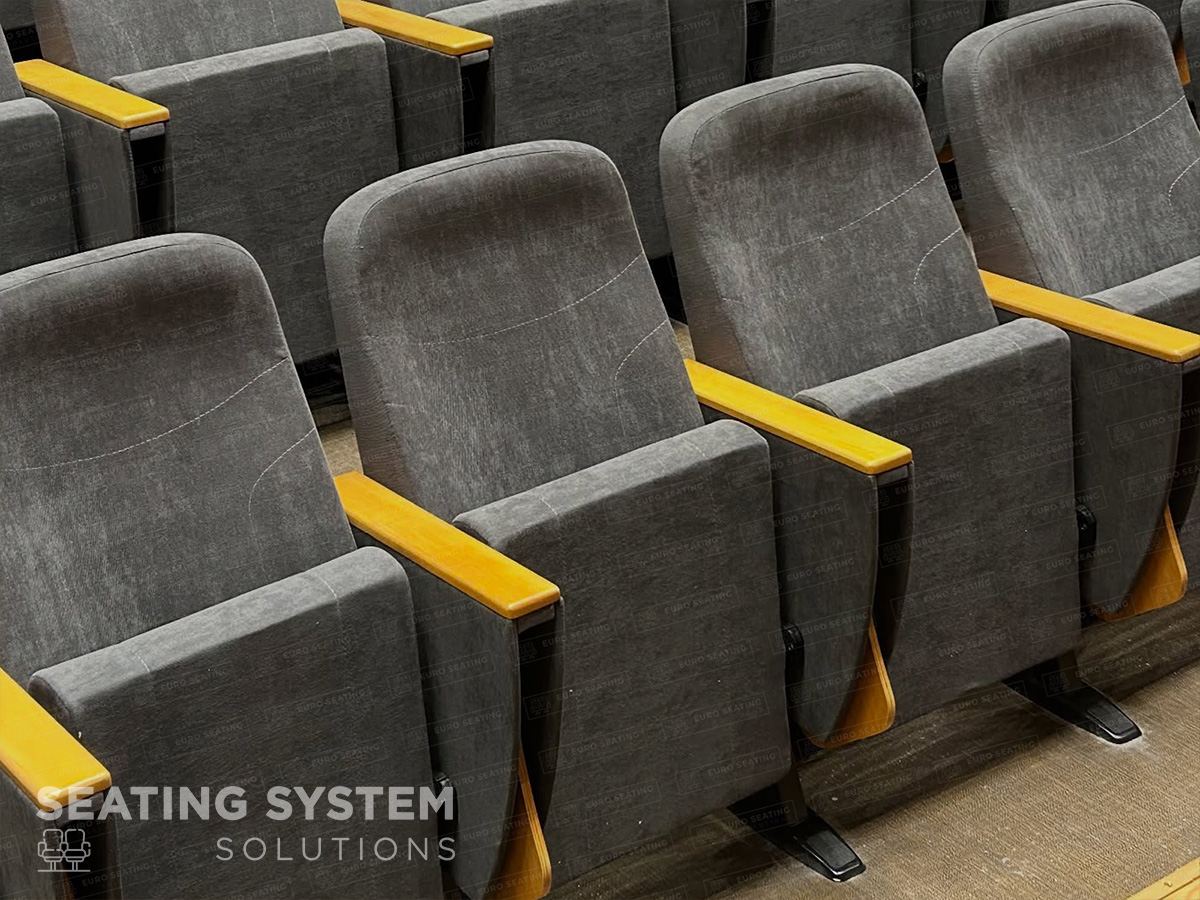
Auditorium Chairs with Writing Tables
Educational institutions have specific requirements that differ from traditional auditoriums.
Students need practical seating that allows them to take notes, use educational materials, and participate in lectures comfortably.
Auditorium chairs with integrated writing tables are particularly suitable for:
Universities and colleges.
Lecture theatres.
Training centres.
Educational conference rooms.
Professional seminar facilities.
Depending on the model, writing surfaces may feature folding or anti-panic mechanisms that help improve usability and space management.
The Harmony Y70 Auditorium Lecture Seating with Antipanic Table and other lecture seating solutions are examples of models worth considering for educational projects.
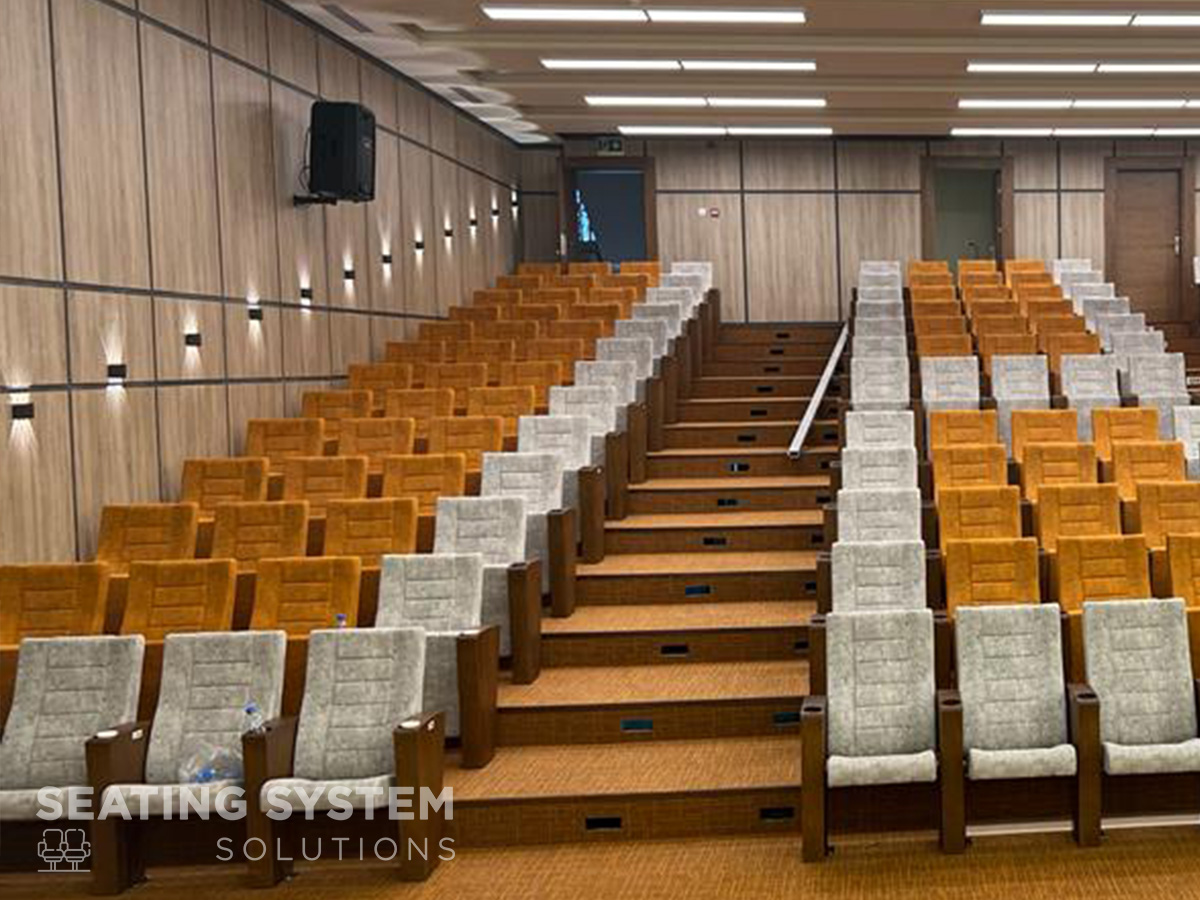
Wooden Auditorium and Theatre Seating
Wooden auditorium chairs offer a distinctive architectural appearance.
They are particularly suitable for opera houses, cultural centres, theatres, traditional conference halls, and venues where interior aesthetics are especially important.
Wooden finishes can create an elegant atmosphere while allowing designers to coordinate the seating with architectural elements, flooring, wall finishes, and lighting.
Depending on the model, wooden elements may be combined with upholstered seats and backrests for additional comfort.
VIP Auditorium Seating
Some venues require a more exclusive seating experience.
VIP auditorium seating is suitable for premium conference areas, executive halls, cultural venues, and special audience sections.
Typical design priorities include:
More generous seating proportions.
Premium upholstery options.
Refined armrest designs.
High-quality visual finishes.
Comfortable backrest construction.
VIP seating can also be integrated into a larger seating project to create different audience sections without compromising the overall interior design.
Economical Auditorium Seating
For large-scale projects, budget management is an important consideration.
Schools, public institutions, educational centres, and conference facilities may need to equip hundreds of seats while maintaining a controlled investment.
Economical auditorium seating offers practical solutions for projects where functionality, durability, and cost efficiency are key priorities.
The important point is to compare the actual construction, materials, specifications, and expected usage rather than selecting a model based exclusively on its purchase price.
3. The Most Important Features to Look for in Auditorium Chairs
When comparing auditorium seating manufacturers, buyers should examine more than the external appearance of a chair.
The following features can significantly influence the quality and suitability of a seating solution.
Ergonomic Seat and Backrest Design
The seat and backrest should support a comfortable sitting position.
Pay attention to:
Seat width and depth.
Backrest height and shape.
Cushioning materials.
Supportive seating proportions.
Armrest positioning.
Ergonomics should be considered in relation to the expected audience and duration of use.
High-Quality Materials
Material selection influences appearance, maintenance, and durability.
Common materials used in commercial seating include:
Metal structural components.
Polyurethane seat and backrest construction.
European fabrics and upholstery.
Wooden armrests and back panels.
Plastic seat and back covers.
Plywood components.
Each material offers different practical and aesthetic characteristics. The right combination depends on the intended application and project specifications.
Folding Seat Mechanisms
Folding auditorium seats are useful in venues where circulation and space management are important.
Some models use spring-assisted mechanisms that allow the seat to return automatically after use.
For these systems, buyers should examine the movement mechanism, noise levels, ease of maintenance, and expected usage.
Anti-Panic Writing Tables
For educational and conference environments, integrated writing tables can make auditorium seating more functional.
Anti-panic writing table mechanisms are designed to provide a practical way of returning the writing surface to its resting position, helping maintain an organised seating arrangement.
Fixed and Secure Installation
The installation system is another important consideration.
Depending on the venue, chairs may be installed using different floor-fixing configurations.
The final selection should take into account the floor construction, project drawings, local safety requirements, and manufacturer's technical recommendations.
4. How to Plan the Perfect Auditorium Seating Layout
Even the highest-quality auditorium chairs cannot deliver their full potential if the seating layout is poorly planned.
A professional layout must balance audience capacity, comfort, visibility, accessibility, and circulation.
Start with Accurate Room Measurements
Before selecting a chair model, establish the dimensions of the auditorium.
Important measurements include:
Total room width and length.
Available floor area.
Stage or presentation platform dimensions.
Entrance and exit locations.
Aisle positions.
Ceiling height.
Floor slope or tier configuration.
These measurements help determine which seating configurations are practical.
Calculate the Seating Capacity
The maximum possible number of chairs should not be the only objective.
A successful auditorium design must provide enough space for visitors to sit comfortably and move safely.
Consider the seat width, distance between rows, aisle dimensions, wheelchair-accessible positions, and local building regulations.
Consider Sightlines
Every audience member should have an appropriate view of the stage, screen, or presentation area.
The layout should account for the height of the stage, floor slope, row positioning, and seat alignment.
Plan Circulation and Accessibility
Clear circulation routes are essential for visitors and staff.
The design must consider entrances, exits, aisles, accessible seating, emergency evacuation routes, and applicable local regulations.
Choose the Right Chair Dimensions
Different models have different dimensions.
A wide VIP chair, for example, will require a different layout from a compact lecture hall chair.
This is why it is important to select the seating model before finalising the auditorium's seating plan.
5. Auditorium Seating for Universities and Educational Institutions
Educational institutions represent one of the most important markets for professional auditorium seating.
Universities, colleges, schools, and training centres require seating systems that support learning activities and accommodate regular daily use.
Unlike traditional theatre seating, lecture hall seating often requires additional functionality.
Writing tables, integrated desk systems, folding seats, and durable construction are important considerations.
What Should Universities Look For?
Comfort for Long Lectures
Students may spend several hours attending classes. Supportive seating and suitable cushioning help create a more comfortable learning environment.
Practical Writing Surfaces
Writing tables allow students to take notes and use educational materials without requiring separate desks.
Efficient Layouts
Tiered seating arrangements can improve visibility and make effective use of available space.
Durable Construction
Educational seating is frequently used throughout the academic year. Material quality, mechanisms, and maintenance requirements should therefore be carefully evaluated.
Seating System Solutions offers different lecture hall and educational seating options for universities and educational facilities.
Discover our Lecture Seating Solutions.
6. Auditorium Seating for Conference Centres and Cultural Venues
Conference centres and cultural venues often host a wide range of events, including:
International conferences.
Business meetings.
Corporate presentations.
Government events.
Cultural performances.
Academic ceremonies.
Seminars and training sessions.
These spaces require seating that combines comfort, professional aesthetics, and functionality.
For conference centres, fully upholstered chairs and integrated writing tables can be useful depending on the room's purpose.
For cultural centres, wooden finishes and elegant upholstery may be more appropriate.
The best solution is one that reflects the venue's identity while meeting the operational requirements of the facility.
A consistent seating design also helps create a more organised and visually appealing interior.
7. Choosing the Right Auditorium Seating Manufacturer
Selecting the manufacturer is just as important as selecting the chair itself.
A commercial seating project can involve hundreds of products, multiple specifications, custom finishes, detailed technical drawings, and coordination with architects and contractors.
Working with an experienced manufacturer can help simplify the purchasing process.
Here are the most important factors to consider.
Manufacturing Experience
Look for a manufacturer with experience in different types of commercial seating projects.
Review its product portfolio, completed projects, and experience with venues similar to yours.
Product Variety
A manufacturer with a broad catalogue can help you compare different solutions within the same project.
This may include economical auditorium chairs, fully upholstered models, VIP seating, wooden theatre chairs, and lecture seats with writing tables.
Technical Specifications
Always request detailed product information.
This should include available dimensions, construction materials, upholstery options, fixing methods, mechanisms, and technical drawings where applicable.
Customisation Possibilities
Every project has different architectural and functional requirements.
Depending on the available models and manufacturing options, customisation may include fabric colours, upholstery materials, wooden finishes, armrest designs, and seating configurations.
International Project Experience
If you are purchasing from an international manufacturer, review its project portfolio and experience in supplying different markets.
Completed projects can help you understand the manufacturer's capabilities and the range of facilities it has served.
Communication and Project Coordination
A professional supplier should be able to understand your requirements and provide clear information about specifications, production, delivery, and the services included in the quotation.
Before making a final decision, clarify responsibilities for transportation, installation, warranty, and after-sales support.
8. Why Choose Seating System Solutions for Your Auditorium Project?
Seating System Solutions is a commercial seating manufacturer based in Bursa, Türkiye, specialising in solutions for a wide variety of professional environments.
Our product portfolio includes auditorium chairs, conference seating, theatre seating, cinema chairs, stadium seats, lecture hall seating, and public-area seating.
We understand that every project has its own requirements. A university lecture theatre has different priorities from a cultural centre, a cinema, or an international conference hall.
Our approach focuses on providing a broad selection of seating models that allows project developers, architects, contractors, and venue operators to identify suitable solutions.
A Wide Selection of Seating Models
Our catalogue includes different styles and configurations, including:
Fully upholstered auditorium chairs.
Auditorium chairs with writing tables.
Wooden auditorium and theatre seating.
VIP conference and auditorium chairs.
Economical auditorium seating.
Cinema chairs with cup holders.
Premium cinema and reclining seating.
Stadium and sports venue seating.
International Project Portfolio
Our completed projects demonstrate our experience in supplying seating for different types of facilities.
Some examples include:
Al-Biruni University Conference Hall in Istanbul, featuring more than 400 chairs.
Cineteatro Florbela Espanca in Portugal, featuring 300 seats.
Prince Hussam Conference Center in Saudi Arabia, featuring 222 auditorium chairs.
International projects for educational institutions, cultural venues, and sports facilities.
These examples demonstrate the variety of projects represented in our portfolio.
Solutions for Different Project Budgets
We offer different seating models and configurations to help customers compare solutions according to their technical requirements, design preferences, and budgets.
A Project-Oriented Approach
We encourage customers to share their project information so that the appropriate seating options can be evaluated.
Our team can help you identify relevant models and discuss the specifications required for your venue.
Explore our Auditorium Seating Collection to discover the available models.
9. How Much Does Auditorium Seating Cost?
One of the most common questions from project developers is how much it costs to furnish an auditorium.
There is no single price that applies to every project because the total investment depends on several factors.
Type of Chair
Economical auditorium seating generally has different specifications and pricing from premium fully upholstered or VIP models.
Materials and Finishes
The selected upholstery, wooden components, plastic covers, metal structures, and other finishing options can influence the final price.
Number of Seats
The total quantity is an important part of commercial project pricing.
A project involving 100 chairs will have different purchasing requirements from a project involving 500 or 1,000 chairs.
Additional Features
Writing tables, folding mechanisms, special armrests, and other optional features may influence the overall quotation.
Project Requirements
Delivery destination, packaging, transportation, installation arrangements, and any project-specific requirements should also be clarified.
How to Get an Accurate Auditorium Seating Quotation
To receive a more relevant quotation, prepare the following information:
Type of venue: university, theatre, auditorium, conference centre, or cultural centre.
Project location and destination country.
Estimated number of seats.
Room dimensions or architectural drawings.
Preferred seating models or reference photographs.
Preferred colours, materials, and upholstery.
Additional features such as writing tables or folding mechanisms.
Expected delivery schedule.
Installation requirements, if applicable.
Providing these details helps the manufacturer understand your project and recommend suitable seating options.
10. Common Mistakes to Avoid When Buying Auditorium Chairs
Purchasing auditorium seating is a significant investment. Avoiding common mistakes can help protect your budget and improve the final result.
Choosing Chairs Based Only on Price
The cheapest chair is not necessarily the most cost-effective option over its service life.
Compare construction, materials, comfort, maintenance, and expected usage.
Ignoring the Seating Layout
Selecting chairs without checking the room dimensions can result in unnecessary design changes and capacity problems.
Overlooking Maintenance Requirements
Commercial seating needs regular cleaning and maintenance. Consider upholstery suitability and access to replacement components.
Not Reviewing Technical Specifications
Never rely exclusively on product photographs. Request dimensions, construction details, available finishes, and fixing information.
Ignoring Accessibility
Accessibility should be incorporated into the design from the beginning, not treated as an afterthought.
Failing to Compare Complete Quotations
Compare product prices alongside delivery, installation, warranty, and other project-related costs.
Taking the time to evaluate these factors can help you make a more informed purchasing decision.
11. The Future of Modern Auditorium Seating
Modern venue design increasingly focuses on creating spaces that are comfortable, functional, visually attractive, and adaptable to different activities.
Auditorium seating continues to evolve in response to these requirements.
Several design priorities are particularly relevant to contemporary projects.
Improved Ergonomics
Comfortable seat proportions, supportive backrests, and well-designed cushioning remain essential for venues that accommodate long events.
Flexible Seating Configurations
Different folding and fixed seating arrangements allow designers to adapt solutions to the architectural and operational requirements of each venue.
Modern Materials and Finishes
A wider selection of upholstery, wooden details, and surface finishes allows seating to complement contemporary architectural concepts.
Integrated Functionality
Writing tables, cup holders, reclining mechanisms, and other features can enhance the user experience when selected for the appropriate application.
Long-Term Value
Venue owners increasingly need to consider the complete lifecycle of their seating investment, including maintenance, replacement requirements, and durability.
For manufacturers and project developers, the challenge is to combine these priorities without compromising functionality, appearance, or budget.
12. Start Your Auditorium Seating Project with the Right Partner
Whether you are developing a new university lecture hall, renovating a cultural centre, furnishing a conference facility, or planning a large auditorium, choosing the right seating manufacturer is essential.
The right seating solution should reflect your venue's purpose, architectural design, audience requirements, available space, and long-term operational needs.
At Seating System Solutions, we offer a diverse range of commercial seating solutions for professional projects worldwide.
From economical auditorium chairs to premium upholstered seating, wooden theatre chairs, and lecture hall seats with integrated writing tables, our portfolio provides options for different types of facilities.
Our team is ready to discuss your requirements and help you explore suitable models for your next project.
Looking for Professional Auditorium Seating?
Let us help you find the right seating solution for your project.
Contact Seating System Solutions
Website: https://seatingsystemsolutions.com/
Email: info@seatingsystemsolutions.com
Phone / WhatsApp: +90 507 790 07 57
Location: Bursa, Türkiye
Request a quotation today and tell us about your project.
Seating System Solutions – Comfort, Quality and Functionality for Every Venue.
